They're attracted to light and warmth. We apply residual treatment at entry points, seal gaps, and advise on lighting — so crickets stay outside and the chirping stops.
Residual at entry points. Seal gaps. Reduce light.
6 mo. agreed premises programme when quoted; lighting/sealing cooperation; quote prevails · No vacating · Safe when dry.
Cricket guide
Residual entry barriers, sealing, lighting advice, guarantees, then book by city or browse regions.
Cricket activity is low in winter. Seal gaps and reduce lighting so next summer’s crickets do not become a problem. We can treat any remaining indoor hotspots.
Low
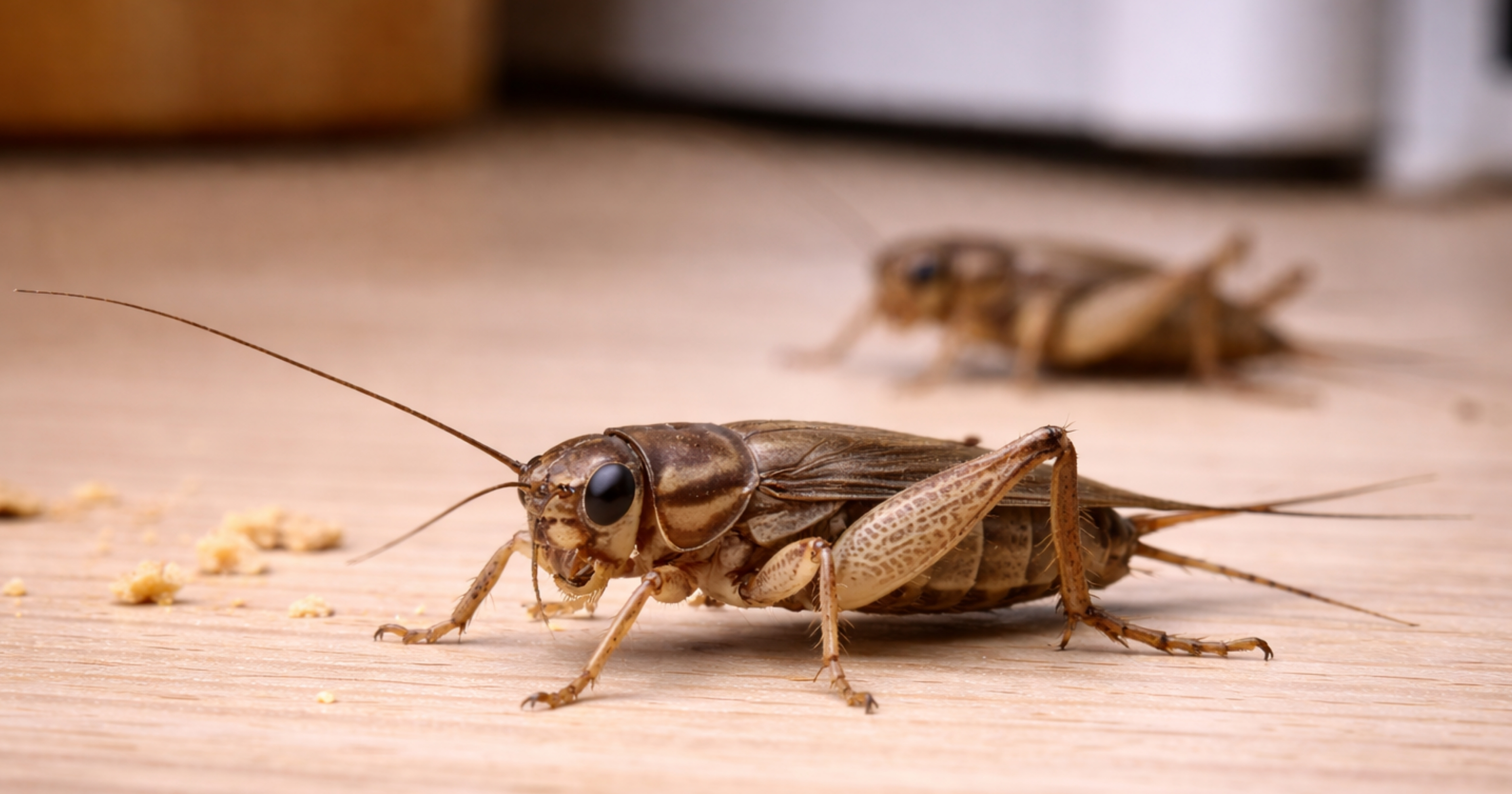
House cricket, Field cricket
Chirping at night or crickets indoors? We stop them at the entry points.
Here's what we look for:
Understanding the cause is the first step to lasting control—otherwise you're just hosting a sequel. Here's what we see on every job.
Outdoor lights attract crickets; unsealed gaps let them in. We treat entry points and advise on reducing lighting and sealing so they don't return.
Gardens and vegetation provide habitat. Crickets move toward warmth and light at night. Keeping vegetation back and treating the perimeter help.
Summer and autumn see the most activity. One treatment may need follow-up or reinforcement. We advise on timing and lighting for the next season.
Cracks and gaps can develop. We identify and seal so crickets don't find new ways in.
Leaving outdoor lights on at night keeps attracting crickets. We advise on reducing or redirecting lighting so the property is less attractive.
Residual treatment stops them at entry points; reducing lighting stops the draw. Both are needed for lasting control.
Crickets are attracted to light and warmth. They enter through gaps and chirp at night. Residual treatment at entry points stops them; sealing gaps and reducing outdoor lighting stop them from coming back. They don't bite or damage structures — but chirping and numbers indoors are a nuisance.
Outdoor lighting draws crickets to doors and windows. Reducing or redirecting lights at night and sealing gaps keep them outside. We treat entry points and advise on both.
Crickets get in under doors, around windows, and through cracks. We apply residual treatment at these points so new crickets don't get in. Sealing gaps reinforces the barrier.
Cricket activity peaks in summer and continues into autumn. As evenings cool, they seek warmth indoors. Treatment and sealing give relief; lighting advice limits attraction next season.
Crickets do not bite or damage structures. Chirping at night and numbers indoors are the main complaints. We stop them entering and reduce what attracts them.
That's why we combine residual treatment with sealing and lighting advice — so crickets stay outside and chirping stops.
We assess entry points, apply residual treatment, advise on sealing and lighting, and offer follow-up in high-pressure seasons.
We find where crickets are entering — doors, windows, gaps — and where lighting is attracting them.
We treat entry points with residual product so crickets are stopped before they get inside.
We advise on sealing gaps under doors, around windows, and in foundations so new crickets can't get in.
We recommend reducing or redirecting outdoor lighting at night so crickets are less attracted to the property.
In high-pressure seasons we can return to reinforce treatment. Lighting and sealing help between visits.
We ensure entry points are protected and you have the advice to keep crickets out and chirping down.
Cricket control should stop them at the door and reduce what attracts them. We apply residual treatment at entry points and advise on sealing and lighting. No vacating; safe when dry.
Written guarantee on agreed entry and named perimeter scope when quoted; lighting and sealing cooperation; not zero outdoor crickets—your quote prevails.
We treat doors, windows, and gaps where crickets get in so they are stopped before entering.
Treatment is at entry points. You don't need to leave. We advise on keeping pets off until dry.
We advise on sealing gaps under doors and around windows. Small exclusions make a big difference.
We recommend reducing or redirecting outdoor lighting so crickets are less attracted to the house.
We can return in high-pressure seasons to reinforce treatment. Sealing and lighting help between visits.
Products are applied at entry points. Once dry, the area is safe for people and pets.
Proper cricket control should feel decisive — treatment plus sealing and light. That's the Verminator difference.
Fast response. Expert assessment. Treatment tailored to your site—engineered to get it right, not just get them gone.
Quick answers to common questions.
We're here to help — get a free quote when you're ready.
Residual treatment at entry points plus sealing and lighting advice. Get a fast quote.