They sting repeatedly and can swarm when disturbed. We locate the nest, treat at the right time (often dusk), and remove it — so your family is protected. Don't risk DIY.
Professional nest removal. Not DIY.
6 mo. agreed nest/premises programme when quoted; not all-foragers; quote prevails · Dusk timing when suitable · Safe nest-led treatment · Prevention advice.
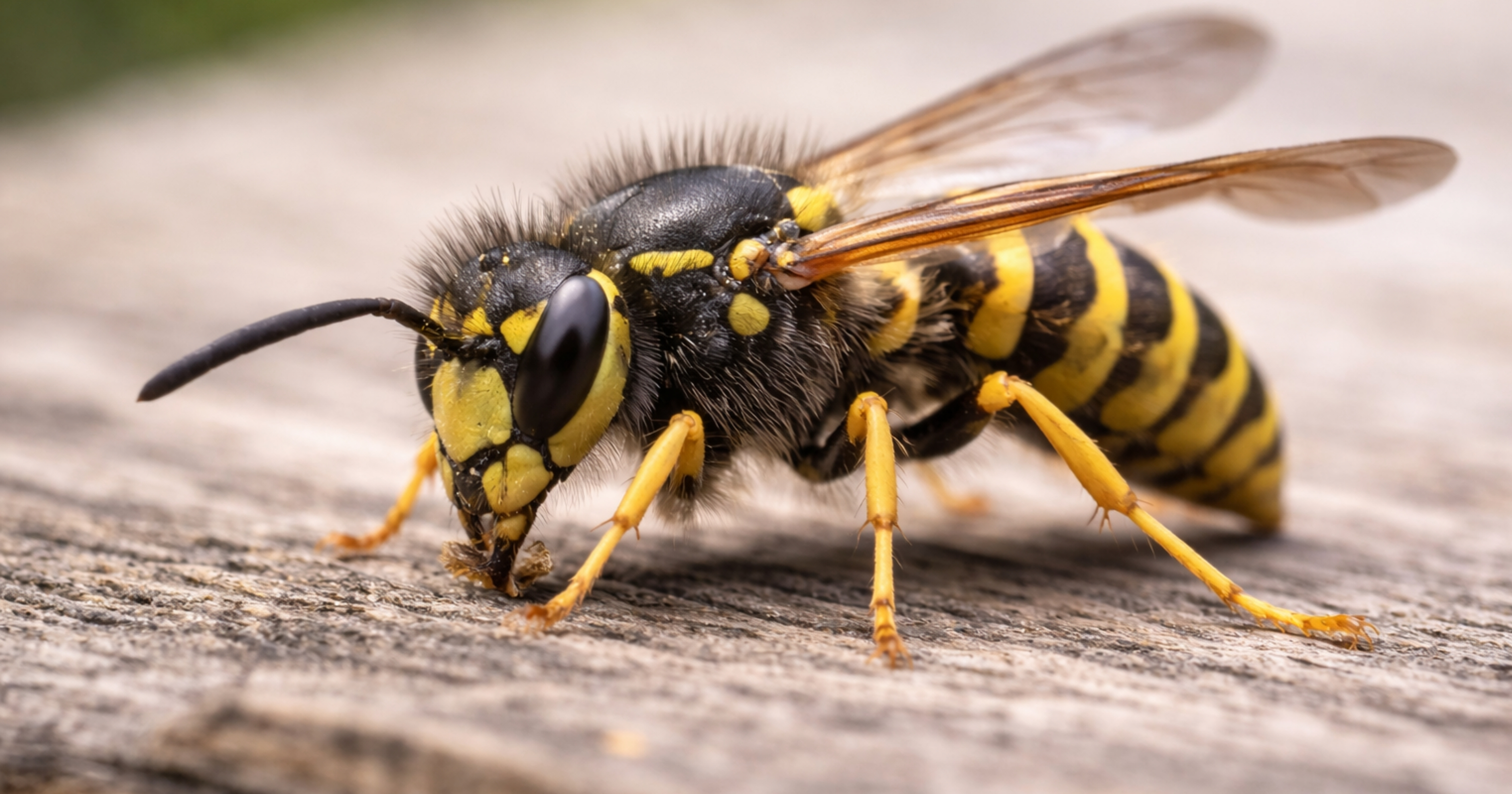
Wasp guide
Nest-led methodology, guarantees, identification, safety, then book by city or browse regions.
Wasp activity is low in winter. Use the quiet period to seal potential nesting sites so spring nest-building is discouraged. We can advise on exclusion and removal when activity resumes.
Low
Paper wasp, Mason wasp
Nests grow through summer. Spot activity early and call for professional removal.
Here's what we look for:
Understanding the cause is the first step to lasting control—otherwise you're just hosting a sequel. Here's what we see on every job.
Queen wasps start new nests each year. Early inspection and treatment in spring can prevent large nests later.
Fruit, sugary drinks, and open bins attract foraging wasps. Reducing food sources and covering bins helps.
Eaves, sheds, and cavities offer ideal nesting sites. Sealing gaps where practical can reduce future nesting.
Nests in wall cavities or high spots can be missed. We locate and treat the nest so the colony is controlled.
DIY attempts can provoke swarming. Professional treatment at dusk minimises risk. Don't attempt removal yourself.
We have the equipment and timing to treat safely. We remove the nest and advise on preventing future nesting.
Wasps build nests in sheltered spots and can sting repeatedly when threatened. Nests grow through summer; early treatment is safer and easier. We locate the nest, treat at dusk when wasps are less active, and remove it. For bees, we recommend a beekeeper for relocation — we treat wasp nests.
Wasps can sting repeatedly and may swarm when the nest is disturbed. DIY removal is risky. Professional treatment at the right time reduces the chance of stings.
Eaves, sheds, trees, and wall cavities are common. Paper wasps build open combs; other species build enclosed nests. We find the nest and treat it directly.
Treatment at dusk when wasps are less active is often most effective. We assess each situation and advise on the best time. Early treatment stops nests from growing.
Wasps are more aggressive and can sting repeatedly. Bees usually sting once. We treat wasp nests; for bees we recommend contacting a beekeeper for relocation where possible.
That's why we leave nest removal to professionals — safe treatment at the right time, with advice on preventing future nesting.
We locate the nest, treat at the right time (often dusk), control the colony, and remove the nest. We advise on preventing future nesting.
We find where wasps are entering and exiting — eaves, trees, sheds, or cavities. We identify the nest site before treatment.
We choose the right time (often dusk) when wasps are less active. We use targeted products and protective measures.
We apply treatment to the nest entrance or nest itself so the colony is controlled. We work safely to avoid provoking swarms.
Once the colony is controlled, we can remove the nest where appropriate so it doesn't attract others or cause ongoing issues.
We advise on sealing gaps, reducing attractants (food, bins), and inspecting early in the season for new nests.
We ensure the nest is fully controlled. If you see activity again, we can reassess — sometimes a second nest is present.
Wasp nest removal should be safe and decisive. We treat at the right time, use the right approach, and remove the nest. Don't risk DIY — call us for professional wasp control.
Written guarantee on agreed nest/premises scope when quoted; colony control at the nest; not every forager on the property; secondary nests may be separate. Bees handled per agreement—your quote prevails.
We treat at dusk when wasps are less active and use methods that minimise the risk of stings. We don't recommend DIY removal.
We find the nest and treat it directly — not just a surface spray. That way the colony is properly controlled.
Once the colony is controlled, we remove the nest where appropriate so you don't have ongoing issues or attractants.
We assess each situation and advise on the best time for treatment. Early treatment prevents nests from growing.
We advise on sealing gaps, covering bins, and reducing food sources to make your property less attractive to wasps.
We explain what we did and what to do if you see wasps again (e.g. a second nest).
Proper wasp control should feel safe and final — not a half measure. That's the Verminator difference.
Fast response. Expert assessment. Treatment tailored to your site—engineered to get it right, not just get them gone.
Quick answers to common questions.
We're here to help — get a free quote when you're ready.
We treat at dusk and remove the nest. Don't risk DIY — get a fast quote.